Health Equity

Health as a fundamental right and shared responsibility between individuals, communities and institutions.

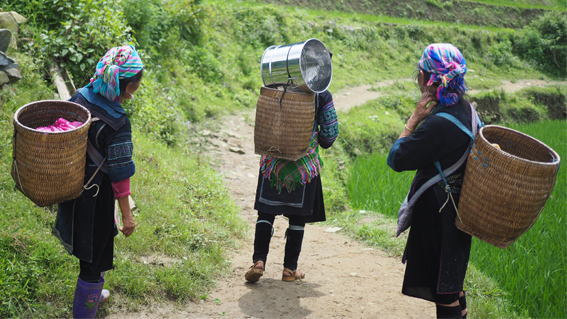
Health inequalities are not solely the result of isolated individual choices, but rather the outcome of social, economic, cultural, environmental and territorial determinants that systematically influence people’s opportunities to live a healthy life. Material living conditions, access to education and employment, health and social services, as well as the quality of the environment and social relationships, profoundly shape the health trajectories of individuals and communities.

The Health Equity Unit adopts an integrated approach to address the individual, community and collective dimensions of health. It combines the analysis of people’s health trajectories and their experiences of in accessing and using health services with the study of the role of communities, social networks, and territorial contexts in health promotion and prevention.

The Unit offers scientific and operational research services, evaluation, policy support and co-creation of interventions. The Unit offers scientific and operational research, evaluation, policy support and co-creation of interventions. The Unit operates  at local, national and global levels, collaborating with public entities, health services, third sector organisations, local communities and international cooperation actors. Through interdisciplinary approaches and the use of both quantitative and qualitative methodologies, the Unit  contributes to the development  of knowledge and solutions aimed at making health and social care systems more equitable, accessible and responsive to the challenges of contemporary society.

Analysis of healthcare service accessibility
The Unit analyses access to services as a dynamic process that arises from the interaction between service characteristics and people’s ability to recognise their need, reach and use services. This approach allows for the identification of organisational, economic, cultural and relational barriers and supports the design of more equitable and people-centred services.

Gender medicine
We integrate gender medicine and gender inequality analysis to consider biological, social and relational differences. The aim is to make health policies and services more equitable, appropriate and responsive

Co-creation and participatory methodologies in healthcare
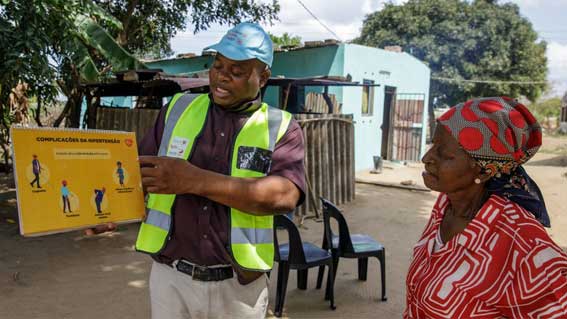
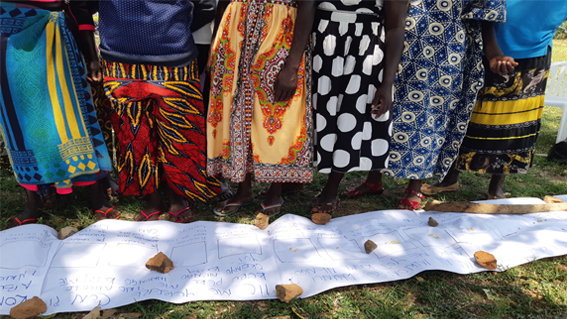
The Unit actively involves citizens, healthcare personnel and institutions in the design and evaluation of health interventions. Co-creation improves the effectiveness, equity and sustainability of services.

Methodological
approaches

  • Health equity and social inequalities
  • Health and social determinants
  • Gender, health and gender medicine
  • Health coverage and financial protection
  • Maternal and newborn health
  • Sexual Reproductive Health and Rights (SRHR)
  • Prevention and combating gender-based violence
  • Prevention and health promotion
  • Chronic conditions, ageing and non-communicable diseases
  • Health, environment and climate change
  • Social innovation, participation and co-creation in healthcare
  • Health throughout the life course, with a focus on children, adolescents and young people

Research
topics

Theoretical framework

The theoretical framework is inspired by Amartya Sen’s capability approach and the paradigm of sustainable human development, which conceive health as a central component of people’s real freedoms and opportunities.

The concept of health agency – understood as people’s ability and commitment to achieving valued health goals – is of strategic importance in our work. Health agency does not depend exclusively on personal resources, but is closely linked to the accessibility of health services and the opportunity of using them in a timely, appropriate and needs-based manner.

The work of the Health Equity Unit adopts approaches that value the active role of individuals and communities in their health. The Unit recognises empowerment and participation as key elements in improving the effectiveness of public health policies, services and interventions.

Main activities

  • Applied research on health equity and social determinants, using quantitative and qualitative methods
  • Analysis of the accessibility and equity of health services, with a focus on inequalities related to socio-economic status, gender, age, disability, migration and ethnic background, and territorial characteristics
  • Support for the design and implementation of public health policies and interventions
  • Co-creation of public health interventions, including training courses, prevention campaigns and information tools
  • Evaluation of health and social-health policies, programmes and services
  • Impact assessment and social impact assessment of public health policies and interventions
  • Stakeholder mapping and governance analysis from a multi-level perspective, with a focus on coordination between health and social services
  • Training and capacity building for health professionals, decision-makers, third sector organisations and communities
  • Pre-feasibility studies and designs for community-based financial protection schemes, with a focus on sustainability, equity and inclusion

The Health Equity Unit integrates three perspectives into its analyses

The holistic One Health approach: recognising the close interdependence between human health, the environment and ecosystems, the Unit adopts a vision focused on sustainability and intergenerational responsibility.

The multidimensional perspective: health conditions and access to health services are influenced by the interaction of multiple dimensions – including gender, age, socio-economic conditions, disability, migration background, legal status and territorial characteristics – which combine and reinforce one another. The Unit analyses these complex and persistent forms of vulnerability through an intersectional lens.

Artificial intelligence, digitalisation and personalisation of care and prevention: the Unit analyses these innovations not only as technical or clinical solutions, but as phenomena deeply intertwined with ethical, social and cultural dimensions including issues of social acceptability , and with potentially significant effects on inequalities in access and health outcomes.

Let’s connect:

Maria Nannini, PhDResearcher
Coordinator of the Health Equity Unit 
maria.nannini[at]pin.unifi.it

Elisa Betti – Researcher
elisa.betti[at]pin.unifi.it