Mapping social entrepreneurship and capacity building in social impact assessment in Egypt and Palestine
Title VET4 Social Impact
Location Palestine and Egypt
Duration may-december2026
Funding University of Bethlehem
Context
The project “VET4 Social Impact” is a capacity-building initiative in the field of Vocational Education and Training (VET) that aims to strengthen VET and social economy ecosystems, and to promote local economic development in Egypt and Palestine. The project is specifically aimed at young people and women in vulnerable situations, whose socio-economic inclusion is supported by the strengthening of education systems.
Egypt and Palestine share a relatively high human development profile for the North Africa and Middle East region (HDI of 0.731 and 0.715 respectively), but have critical youth unemployment rates: 24 per cent in Egypt and 40 per cent in Palestine, with a marked gender gap: Palestinian women’s labour force participation stands at 16 per cent, compared with 65 per cent for men.
In both countries, over half the population is under 25, and this demographic growth is not accompanied by a vocational education and training (VET) system capable of meeting the needs of the labour market. Entrepreneurship represents a strategic response to unemployment, but remains a marginal choice amongst young people (14.9% in Palestine), hampered by the fragmentation of the support ecosystem, a lack of funding and the absence of specific skills.
The project VET4 Social Impact aims at creating ecosystems based on the Quadruple Helix model, linking vocational training providers, businesses, policy-makers and civil society, capable of driving social innovation. From this perspective, entrepreneurship becomes a strategic tool, not only for individual empowerment but also for systemic change, particularly when linked to vocational training and rooted in the needs of the community.
The project is led by VIS – Volontariato Internazionale per lo Sviluppo and funded by EACEA (European Education and Culture Executive Agency) under the framework of the Programme Erasmus+.
General Objective
The Social Economy and Sustainability Management Unit has been involved by the University of Bethlehem in the project to carry out research, training and technical assistance aiming at strengthening the social entrepreneurship ecosystem and promoting the integration of vocational training, self-employment and sustainable economic development in Egypt and Palestine.
Our contribution
ARCO’s consultancy within the project is structured in four phases.
The research team is conducting a mapping of existing organisations that support the development of social entrepreneurship in the two countries, also through semi-structured interviews with key stakeholders. In parallel, it is carrying out a literature review on the current support ecosystem for the emergence and growth of social entrepreneurship, with a particular focus on the regulatory, fiscal, public policy, financial and cultural framework.
The findings and evidence on gaps, needs and growth opportunities for social entrepreneurship feed into two national-level reports for Egypt and Palestine respectively, a database of the actors mapped in both countries, and a summary of the interviews conducted.
The second part of the work consists of developing educational materials and delivering both online and in-person training on social impact assessment, to support organisations with a social mission in communicating the impact of their initiatives and increasing transparency in the use of invested resources. The training programme, which alternates theoretical explanations with practical exercises, will focus specifically on methodologies and tools for monitoring and measuring impact, with particular attention to the Theory of Change and internationally recognised methodologies such as SROI — Social Return on Investment.
Finally, ARCO will provide technical support for the development of two vocational training clusters in sustainable tourism. Specifically, it will assist in defining strategic guidelines for the establishment of one centre per country, through context analysis, participatory focus groups and shared validation processes, developing operational recommendations on governance and sustainable development.
Read more on the Social Economy and Sustainability Management Unit
Related Projects
-

Mapping social entrepreneurship and capacity building in social impact assessment in Egypt and Palestine
-

SROI analysis and evaluation of the project aimed at contrasting food crises in Syria
-

Training and capacity building on structuring the ESG strategy of Tuscan Cooperative Credit Banks
-

SROI Analysis for the association UGI -Unione Genitori Italiani contro il tumore dei bambini
-
BIlancio Sociale per la Pubblica Assistenza Società Riunite di Pisa
-
Consulenza organizzativa per la revisione strategica dell’organizzazione CISV
-

Analisi organizzativa e supporto all’elaborazione di un piano strategico per UGI
-

Consulenza organizzativa su Cultura Cooperativa per Gruppo Banca Etica
-
Consulenza organizzativa e percorsi partecipativi per Fondazione Caritas
-

SROI Analysis and the development of a ESG Rating System for Senegalese Social Enterprises
-
Developing enabling social enterprise ecosystem in Azerbaijan
-
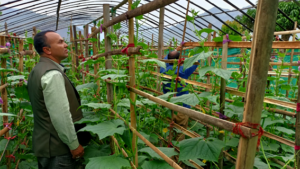
Development of the spices and seeds value chains to foster youth and women empowerment in Nepal
-
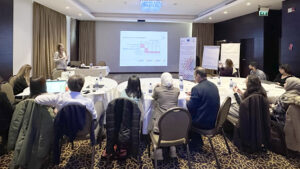
MedRISSE, social innovation and Social and Solidarity Economy policies in the Mediterranean
-

SIRCLES, fostering inclusive employment opportunities in the Circular Economy sector
-

Peace Steps in Palestine : mid-term evaluation & Support to the creation of an Ethical Charter
-
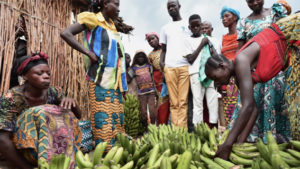
Creating social business to develop the agro-industrial supply chain in Senegal
-

Mid-term Evaluation of the project to foster enabling ecosystems for social enterprises in the MENA Region
-

SROI analysis for the Consortium COOB in Tuscany
-
Social Impact Assessment of Nessuno Indietro, the project that supports Third Sector bodies amid pandemic in Tuscany
-

Social Report for the year 2018 of the Fondazione Opera Santa Rita
-

Social Impact Assessment of children’s protection programmes in Kyrgyzstan
-
SROI Analysis, Albergo Etico social performance
-
Promoting inclusive business and social entrepreneurship in Palestine
-
Promoting social business at the local level: Pistoia Social Business City
-

SROI analysis of Ronald McDonald Houses
-
Market analysis of social businesses in Mozambique and Tanzania
-
The European research project to develop social entrepreneurship and social enterprises