APEOS, research into innovative processes for the sustainability of recycled textiles in Prato
Title APEOS – Sviluppo di un processo innovAtivo per la sostenibilità del tessile riciclato Pratese in conformità alla Strategia Europea per i prOdotti tessili Sostenibili e circolari
Location Prato, Italia
Duration 2024-2026
Lead partner Comistra srl
Partners FILATI OMEGA S.R.L., L.A.I.P. S.R.L., Fondazione Pin – Polo di Prato Università di Firenze
Progetto Lana SRL
Funding Regione Toscana (Bando PR FESR 2021-2027)
Context
The Prato textile district stands out for the circular economy practices it has adopted in its production processes and consolidated over the years. Nevertheless, some difficulties remain due to the presence of excessive levels of alkylphenol ethoxylates (or APEOs) in textile products, which have a negative impact on both health and the environment.
Alkylphenol ethoxylates are a group of chemical compounds commonly used as non-ionic surfactants in a variety of consumer and industrial products, including detergents and textile fibre washing products, particularly in the wool sector. The current situation highlights a problematic scenario for the Prato district, as current legislation sets the same limit value for APEO content in both virgin and recycled fabric samples.
These restrictions have highlighted problems for recycled products, as the presence of these substances above the limits set by legislation has been detected in all fabric samples.
The issue of alkylphenol ethoxylates has attracted the attention from governments, regulatory bodies, companies and consumers. Together, they are pushing for a greater awareness and the implementation of measures to reduce the use of these compounds in order to mitigate their negative impacts. It is precisely in this context that the activities planned in the APEOS project come into play.
With the project APEOS, companies in the Prato recycled textile sector intend to seek environmentally compatible and safe alternatives to solve the problem of regulatory limits on APEOs in their production processes.
In particular, the project involves studying the variability of APEO content in samples with different compositions and colours in individual samples of recycled fabric and identifying suitable systems for their degradation. The study will be carried out preliminarily in the laboratory, and then the correct parameters will be defined for the construction of a prototype plant that uses ozone for this purpose. Ozone is a powerful oxidant used in the degradation of APEOs in wastewater and has not yet been used for the treatment of fabrics to assess its effects on such samples.
Obiettivo Generale
The APEOS project therefore aims to study the effects of ozone on alkylphenol ethoxylates present in fabric fibres and assess their degradation capacity both on fibres and in wastewater. Thanks to the study, the project aims to develop a prototype system that allows ozone treatment on fabrics in a safe and controlled manner. Finally, the project aims to create a management platform and database for analysing the economic and environmental impacts (on recycling companies) of the textile district.
Three laboratories are involved in the project for the PIN Foundation: MONAMUR, QuMAP and ARCO, with the Research Unit on Circular Innovation and Sustainable Commodities.
Cosa abbiamo fatto?
The research group composed of the three laboratories of the PIN Foundation focused on studying the behaviour of APEOs bound to fabric in order to identify suitable systems for their degradation and analyse the economic and environmental impacts (on recycling companies) in the textile district.
PIN will carry out laboratory tests and trials to fine-tune the process parameters for prototyping the fabric treatment plant.
The Circular Innovation and Sustainable Commodities Research Unit has also worked on optimising a platform (database) for the collection and management of companies’ environmental data. It was decided to activate a synergy with platforms already active in the district, such as FLOWTEX, to maximise resources and promote the sharing of good practices.
Related Projects
-

Development of Food Policies for the Municipality of Prato
-

Analysis of the industrial and circular economy model for recycled glass in Tuscany. The case of Vetro Revet
-

Support for universities in Argentina, Paraguay, and Chile for the creation of university offices dedicated to circular economy and social innovation
-

Action research to define a management model and strategic development program for the Parco Agricolo della Piana in Tuscany
-

Action-research for the project promoting the ecological transition of the Old Havana City Council, Cuba
-

APEOS, research into innovative processes for the sustainability of recycled textiles in Prato
-

Technical and scientific support for environmental and social sustainability in the Robikki tanning industrial district, Cairo, Egypt
-

Preliminary Assessment Study per il Slow Food Education Centre di Bacolod
-

Technical and scientific training on key EU-US regulatory requirements in the cotton textile sector affecting Egypt
-

Need Analysis of the sustainability of small fair trade cocoa producer cooperatives in Madagascar
-

Memorandum of Understanding for a hop garden for the production of ‘made in Prato’ craft beer
-

FLOWTEX, fostering circular innovation and technology transfer in the textile district in Prato
-
Development of the spices and seeds value chains to foster youth and women empowerment in Nepal
-

RESET – Capitalizing on best practices to support the creation of green businesses in the Mediterranean
-
Prato Circular City: the integrated strategy for the circular transition of the city of Prato
-
Sustainability of Nature Based Solutions (NBS) interventions for water treatment in agricultural contexts
-
Reorganisation of agricultural cooperatives and optimisation of laboratory procedures for agricultural products in Lebanon
-
Inserimento lavorativo e formazione in Economia Circolare, agricoltura e sostenibilità per i detenuti delle isole di Gorgona e Pianosa
-

Project URGE and Circular Economy, technical and scientific support for the Municipality of Prato
-

SIRCLES, fostering inclusive employment opportunities in the Circular Economy sector
-
Peace Steps in Palestine : mid-term evaluation & Support to the creation of an Ethical Charter
-
Creating social business to develop the agro-industrial supply chain in Senegal
-
Need Analysis to promote the sustainability of small cocoa producer communities in Ecuador
-

Promoting the sustainability of the sugar cane supply chain in El Salvador
-
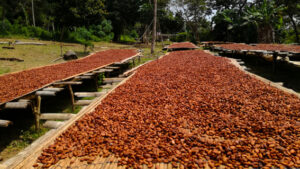
Need Analysis to foster the sustainability of cocoa beans farmers in Togo
-
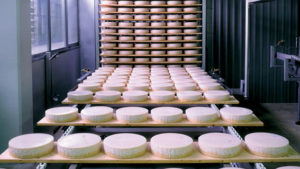
Evaluation of the promotion campaign for Piave DOP cheese in Austria, Germany and Italy
-

Partnership for the Urban Agenda on Circular Economy, a European network
-
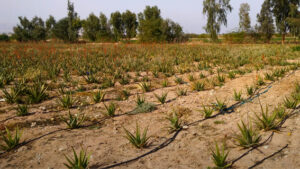
Aloe Vera, a crop to revive the economy of Karak, Jordan
-
Cycle: il progetto per integrare l’economia circolare nella formazione per adulti
-

Improving the sustainability in the cherry supply chain in Bulgaria and Turkey
-
Towards the creation of a quality label for the cherries from the Bekaa Valley
-
Improving quality management in a Palestinian date cooperative
-
Needs analysis for sustainable sugarcane production in Mauritius