Support for universities in Argentina, Paraguay, and Chile for the creation of university offices dedicated to circular economy and social innovation
Location Argentina, Chile, Paraguay, Italy, Spain, Bulgaria
Duration 2023-2025
Partner FE – Fundación Eurosur, UNCUYO – Universidad Nacional de Cuyo (Argentina), UNQ – Universidad Nacional de Quilmes (Argentina), IEV – University of Varna (Bulgaria), PUC – Pontificia Universidad Católica de Chile (Cile), UNAB – Universidad Andrés Bello (Cile), UNIFI – Università degli Studi di Firenze (Italia), PIN Prato – Servizi Didattici e Scientifici per l’Università di Firenze (Italia), CEI – CEI International Affairs – University of Barcelona (Spain), UNI – Universidad Nacional de Itapúa (Paraguay), USC- Universidad de San Carlos (Paraguay)
Funding Erasmus+ Programme of the European Union
Context
HEADCET was created to support universities in Argentina, Chile, and Paraguay in addressing the challenges of sustainable development, the transition to a circular economy, and social innovation, strengthening their role in local systems and labor markets. In many Latin American contexts, there is still a significant gap between university education and the skills required to support green conversion processes, social innovation, and the creation of new skilled jobs.
The project is consistent with the main regional policies on the circular economy and sustainability in Latin America (Coalición Regional de Economía Circular, Agenda 2030, national plans on sustainable consumption and production) and aims to make universities true hubs of skills, services, and networking on the circular economy and social innovation.
General Objective
Support Higher Education Institutions (HEIs) in Argentina, Chile, and Paraguay in strengthening their contribution to local sustainable development through:
- enhancing skills and curricula on the circular economy, social innovation, and sustainability;
- increasing university engagement through multilevel governance and partnerships with public actors, businesses, and the third sector;
- improving the employability of students and recent graduates in fields related to the green transition and the circular economy;
- creating a regional and international network between universities on the circular economy and social innovation, promoting the exchange of good practices.
Our contribution
In the HEADCET project, ARCO supported Latin American partner universities in the design and launch of ODECs (Oficinas de Desarrollo sustentable y Economía Circular), university offices dedicated to circular economy and social innovation. Based on ARCO’s experience as a “hybrid” university laboratory combining research and consulting, a reference model for ODECs was developed.
In a second phase, ARCO/PIN supported the universities in setting up the pilot ODECs, helping them to identify and organize physical spaces, identify staff to be assigned to the new structures, and involve young researchers and students. At the same time, a training and mentoring program was designed and implemented for ODEC teams, with workshops and peer learning activities on topics such as consulting for the circular economy, support for businesses and public administration, European project design, and the activation of services for the local area.
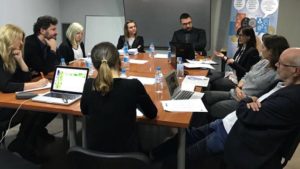
ARCO has also led work on Collaborative Local Labs (COLLs), short local co-design workshops linked to ODECs. Through participatory meetings and discussions, COLLs bring together universities, businesses, public bodies, and civil society organizations to analyze needs and opportunities related to the circular economy and develop concrete project ideas, which ODECs can then help to structure and submit to funding programs. In this way, ODECs and COLLs together become the mechanism through which universities strengthen their role in local sustainable development processes.
Read more on the Circular Innovation & Sustainable Commodity Unit
Related Projects
-

Development of Food Policies for the Municipality of Prato
-

Analysis of the industrial and circular economy model for recycled glass in Tuscany. The case of Vetro Revet
-

Support for universities in Argentina, Paraguay, and Chile for the creation of university offices dedicated to circular economy and social innovation
-

Action research to define a management model and strategic development program for the Parco Agricolo della Piana in Tuscany
-

Action-research for the project promoting the ecological transition of the Old Havana City Council, Cuba
-

APEOS, research into innovative processes for the sustainability of recycled textiles in Prato
-

Technical and scientific support for environmental and social sustainability in the Robikki tanning industrial district, Cairo, Egypt
-

Preliminary Assessment Study per il Slow Food Education Centre di Bacolod
-

Technical and scientific training on key EU-US regulatory requirements in the cotton textile sector affecting Egypt
-

Need Analysis of the sustainability of small fair trade cocoa producer cooperatives in Madagascar
-

Memorandum of Understanding for a hop garden for the production of ‘made in Prato’ craft beer
-

FLOWTEX, fostering circular innovation and technology transfer in the textile district in Prato
-
Development of the spices and seeds value chains to foster youth and women empowerment in Nepal
-

RESET – Capitalizing on best practices to support the creation of green businesses in the Mediterranean
-
Prato Circular City: the integrated strategy for the circular transition of the city of Prato
-
Sustainability of Nature Based Solutions (NBS) interventions for water treatment in agricultural contexts
-
Reorganisation of agricultural cooperatives and optimisation of laboratory procedures for agricultural products in Lebanon
-
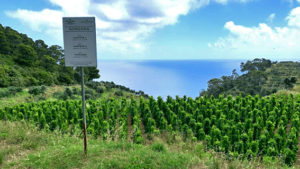
Inserimento lavorativo e formazione in Economia Circolare, agricoltura e sostenibilità per i detenuti delle isole di Gorgona e Pianosa
-

Project URGE and Circular Economy, technical and scientific support for the Municipality of Prato
-

SIRCLES, fostering inclusive employment opportunities in the Circular Economy sector
-
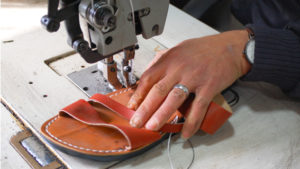
Peace Steps in Palestine : mid-term evaluation & Support to the creation of an Ethical Charter
-
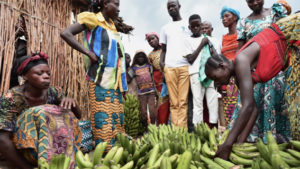
Creating social business to develop the agro-industrial supply chain in Senegal
-

Need Analysis to promote the sustainability of small cocoa producer communities in Ecuador
-

Promoting the sustainability of the sugar cane supply chain in El Salvador
-
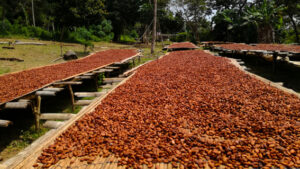
Need Analysis to foster the sustainability of cocoa beans farmers in Togo
-
Evaluation of the promotion campaign for Piave DOP cheese in Austria, Germany and Italy
-

Partnership for the Urban Agenda on Circular Economy, a European network
-
Aloe Vera, a crop to revive the economy of Karak, Jordan
-
Cycle: il progetto per integrare l’economia circolare nella formazione per adulti
-

Improving the sustainability in the cherry supply chain in Bulgaria and Turkey
-
Towards the creation of a quality label for the cherries from the Bekaa Valley
-
Improving quality management in a Palestinian date cooperative
-
Needs analysis for sustainable sugarcane production in Mauritius