Need Analysis of the sustainability of small fair trade cocoa producer cooperatives in Madagascar
Title Need Analysis of the sustainability of small fair trade cocoa producer cooperatives in Madagascar
Location Sambirano Valley– Ambanja, Madagascar
Duration October 2024
Funding Altromercato
Context
Although internationally recognised for the “grand cru effect” of its Criollo and Trinitario varieties, Madagascar’s cocoa sector remains a niche market: the country is the world’s 22nd largest exporter and has around 30,000 active farmers, 95% of whom are concentrated in the Sambirano Valley, where the fertile soil and microclimate are ideal for organic farming. However, the lack of a structured domestic market, the fragmentation of technical and training services, and recent fluctuations in international prices (from 4,000 to 12,000 USD/t in a few months) expose small producers to economic and organisational risks.
General Objective
The Circular Innovation & Sustainable Commodities Unit has been involved in gathering and analysing the economic, social and environmental needs of the members of the Producteur Cacao du Sambirano Cooperative (Co.Pro.CA.SA.) – certified organic and Fair Trade – in order to formulate project proposals aimed at strengthening its sustainability and competitiveness on international markets.
Our contribution
In the first week of October 2024, the research team travelled to Ambanja and the surrounding villages to give a voice to small producers and local stakeholders. Initially, ARCO’s Researchers conducted semi-structured interviews with Co.Pro.CA.SA. managers and representatives of key institutions to map the functioning of the cocoa supply chain, supply relationships and the main service gaps. Each meeting provided an opportunity to explore the issues of cooperative governance, bank guarantees and the difficulties in complying with certifications.
To understand the real needs in the area, the research team organised focus groups with small cocoa producers in the villages where the cooperative members’ plantations are located. In these meetings, cocoa farmers shared traditional agricultural practices, logistical challenges (distances of up to 75 km from the storage warehouse) and expectations for technical and training support.
Finally, visits to individual producers made it possible to observe fermentation and drying techniques first-hand and assess the condition of the infrastructure and equipment available.
This combination of qualitative and quantitative tools provided a deeper understanding of the challenges and opportunities and laid the foundations for formulating realistic project proposals rooted in the needs and aspirations of the beneficiaries themselves.
Read more on the Circular Innovation &Sustainable Commodities Unit
Related Projects
-

Development of Food Policies for the Municipality of Prato
-

Analysis of the industrial and circular economy model for recycled glass in Tuscany. The case of Vetro Revet
-

Support for universities in Argentina, Paraguay, and Chile for the creation of university offices dedicated to circular economy and social innovation
-

Action research to define a management model and strategic development program for the Parco Agricolo della Piana in Tuscany
-

Action-research for the project promoting the ecological transition of the Old Havana City Council, Cuba
-

APEOS, research into innovative processes for the sustainability of recycled textiles in Prato
-

Technical and scientific support for environmental and social sustainability in the Robikki tanning industrial district, Cairo, Egypt
-

Preliminary Assessment Study per il Slow Food Education Centre di Bacolod
-

Technical and scientific training on key EU-US regulatory requirements in the cotton textile sector affecting Egypt
-

Need Analysis of the sustainability of small fair trade cocoa producer cooperatives in Madagascar
-

Memorandum of Understanding for a hop garden for the production of ‘made in Prato’ craft beer
-

FLOWTEX, fostering circular innovation and technology transfer in the textile district in Prato
-
Development of the spices and seeds value chains to foster youth and women empowerment in Nepal
-

RESET – Capitalizing on best practices to support the creation of green businesses in the Mediterranean
-
Prato Circular City: the integrated strategy for the circular transition of the city of Prato
-
Sustainability of Nature Based Solutions (NBS) interventions for water treatment in agricultural contexts
-
Reorganisation of agricultural cooperatives and optimisation of laboratory procedures for agricultural products in Lebanon
-
Inserimento lavorativo e formazione in Economia Circolare, agricoltura e sostenibilità per i detenuti delle isole di Gorgona e Pianosa
-

Project URGE and Circular Economy, technical and scientific support for the Municipality of Prato
-

SIRCLES, fostering inclusive employment opportunities in the Circular Economy sector
-
Peace Steps in Palestine : mid-term evaluation & Support to the creation of an Ethical Charter
-
Creating social business to develop the agro-industrial supply chain in Senegal
-
Need Analysis to promote the sustainability of small cocoa producer communities in Ecuador
-
Promoting the sustainability of the sugar cane supply chain in El Salvador
-
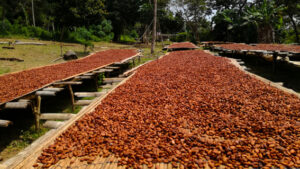
Need Analysis to foster the sustainability of cocoa beans farmers in Togo
-
Evaluation of the promotion campaign for Piave DOP cheese in Austria, Germany and Italy
-

Partnership for the Urban Agenda on Circular Economy, a European network
-
Aloe Vera, a crop to revive the economy of Karak, Jordan
-
Cycle: il progetto per integrare l’economia circolare nella formazione per adulti
-

Improving the sustainability in the cherry supply chain in Bulgaria and Turkey
-
Towards the creation of a quality label for the cherries from the Bekaa Valley
-
Improving quality management in a Palestinian date cooperative
-
Needs analysis for sustainable sugarcane production in Mauritius